|
         |
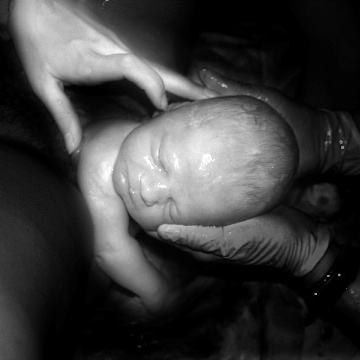
PHILOSOPHY OF CARE This midwifery practice is dedicated to these essential truths about childbirth: The process of human childbirth is a normal physiological process perfectly designed by nature to bring babies into the world. It is an instinctive, primal experience that has it's own rhythm and pace which should be respected and honored, and works best when interfered with as little as possible. Women should have as much control as possible in determining their care, and should be encouraged to be active participants in decision-making and self-care. When informed, supported and encouraged to follow their own instincts, women can be active givers of birth rather than passive receivers of birth technology. Childbirth, when experienced in this way, has the potential to be a transformative event; women who take responsibility for their births and give birth to their babies under their own power, emerge from the experience empowered, with a new sense of their own capabilities. This transformation benefits not only that mother and her children, but also the entire family unit, the community, the culture at large, and ultimately the world, as it encourages peaceful, loving, responsible relationships. As we birth, so we live. Midwifery is both an art and a science. The art of midwifery consists of sensitivity to the needs of women and families, and being able to meet these needs in the most appropriate way. It involves knowing when and how to intervene to promote safety if it becomes necessary, and is grounded in scientific knowledge. The science of midwifery overlaps with that of other disciplines such as medicine and nursing. The crux of the art and science of midwifery lies in the knowledge of and devotion to keeping birth, and other related processes normal. We see our clients as whole, capable people for whom the processes of pregnancy, labor, delivery and parenting offer the opportunity for significant personal growth
"Birthing
is the most profound initiation to spirituality a woman can have."
Holistic Midwives:
Suspended
between worlds, half in, half out, Midwives
who also attend homebirths will:
________________________________________________ "All
over the world there exists in every society a small group of women
who feel themselves strongly attracted to giving care to other women
during pregnancy and childbirth. Failure to make use of this group
of highly motivated people is regrettable and a sin against the principle
of subsidiarity." ___________________________________________________ The Midwives Model of Care The Midwives Model of Care is based on the fact that pregnancy and birth are normal life processes. It includes:
The
application of this woman-centered model of care has been proven to
reduce the incidence of birth injury, trauma, and caesarean section. ____________________________________________________________________ "Attending
births is like growing roses. ____________________________________________________________________
BIRTH
IS NOT AN ILLNESS These 16 recommendations are based on the principle that each woman has a fundamental right to receive proper prental care; that the woman has a central role in all aspects of this care, including participation in the planning, carrying out and evaluation of the care; and that social, emotional and psychological factors are decisive in the understanding and implementation of proper prental care. 1. The whole community should be informed about the various procedures in birth care, to enable each woman to choose the type of birth care she prefers. 2. The training of professional midwives or birth attendants should be promoted. Care during normal pregnancy and birth, and following birth should be the duty of this profession. 3. Information about birth practices in hospitals (rates of surgical birth, etc.) should be given to the public served by the hospitals. 4. There is no justification in any specific geographic region to have more than 10-15% cesarean section births (the current US surgical birth rate is estimated to be about 23%). 5. There is no evidence that a cesarean section is required after a previous transverse low-segment cesarean section birth. Vaginal deliveries after cesarean should normally be encouraged wherever emergency surgical capacity is available. 6. There is no evidence that routine electronic fetal monitoring during labor has a positive effect on the outcome of pregnancy. 7. There is no indication for pubic shaving or a pre-delivery enema. 8. Pregnant women should not be put in a lithotomy position (flat on the back) during labor or delivery. They should be encouraged to walk during labor and each woman must freely decide which position to adopt during delivery. 9. The systematic use of episiotomy (incision to enlarge vaginal opening) is not justified. 10. Birth shoud not be induced (started artificially) for convenience, and the induction of labor should be reserved for specific medical indications. No geographic region should have rates of induced labor over 10%. 11.During delivery, the routine administration of analgesic or anesthetic drugs, that are not specifically required to correct or prevent a complication in delivery, should be avoided. 12. Artificial early rupture of the membranes, as a routine process, is not scientifically justified. 13. The healthy newborn must remain with the mother, whenever both their conditions permit it. No process of observation of the healthy newborn justifies a separation from the mother. 14. The immediate beginning of breastfeeding should be promoted, even before the mother leaves the delivery room (presuming she has given birth in a facility). 15. Obstetric care services that have critical attitudes towards technology and that have adopted an attitude of respect for the emotional, psycho-logical and social aspects of birth should be identified. Such services should be encouraged and the processes that have led them to their position must be studied so that they can be used as models to foster similar attitudes in other centers and to infuluence obsetetrical views nationwide. 16. Governments should consider developing regulations to permit the use of new birth technology only after adequate evaluation. These recommendations are taken from a report on Appropriate Technology for Birth published by the WHO in April 1985.
Home
| About Us | Our
Philosophy | Homebirth | Doula
Care | Waterbirth | Belly
Art
|